

Refuse Truck Compaction Hydraulics in Summer Heat
A refuse truck’s compaction hydraulics is the pump-cylinder-valve-hose circuit that packs and ejects waste. It lives or dies on its seals, the rings and packings holding pressurized fluid at every rod and piston junction. Summer is when those seals start to go, and the failure begins weeks before anyone sees a drip.
Heat speeds up thermal degradation, the loss of a seal’s physical properties after prolonged high temperatures. Nitrile, polyurethane, and similar compounds soften, lose elasticity, and age faster once fluid temperatures stay high. The damage is quiet, and it turns a seal that looked fine into one that fails.
Heat matters here because it pushes fluid temperatures well above their normal range. Fluid that runs 120°F to 160°F in cool weather can pass 200°F when the air is above 95°F and the packer cycles come back to back. Hot oil is thinner, so it grips the rod less and loads every sealing surface harder.
What follows covers how the damage works, how it develops over a season, the signs to catch early, and what keeps a compaction system running through the hottest weeks. Fleet managers weighing short-term capacity should also build these summer wear cycles into their municipal garbage truck rental plans.
Why Summer Heat Accelerates Hydraulic Seal Failure in Compaction Systems
A packer does its hardest work when cooling is worst. It runs dozens of intermittent, high-pressure cycles a shift, and on a hot day the fluid barely cools between them. The result is a chain of thermal-hydraulic damage that routine compaction system maintenance misreads, because a heat-damaged seal looks like a worn one.
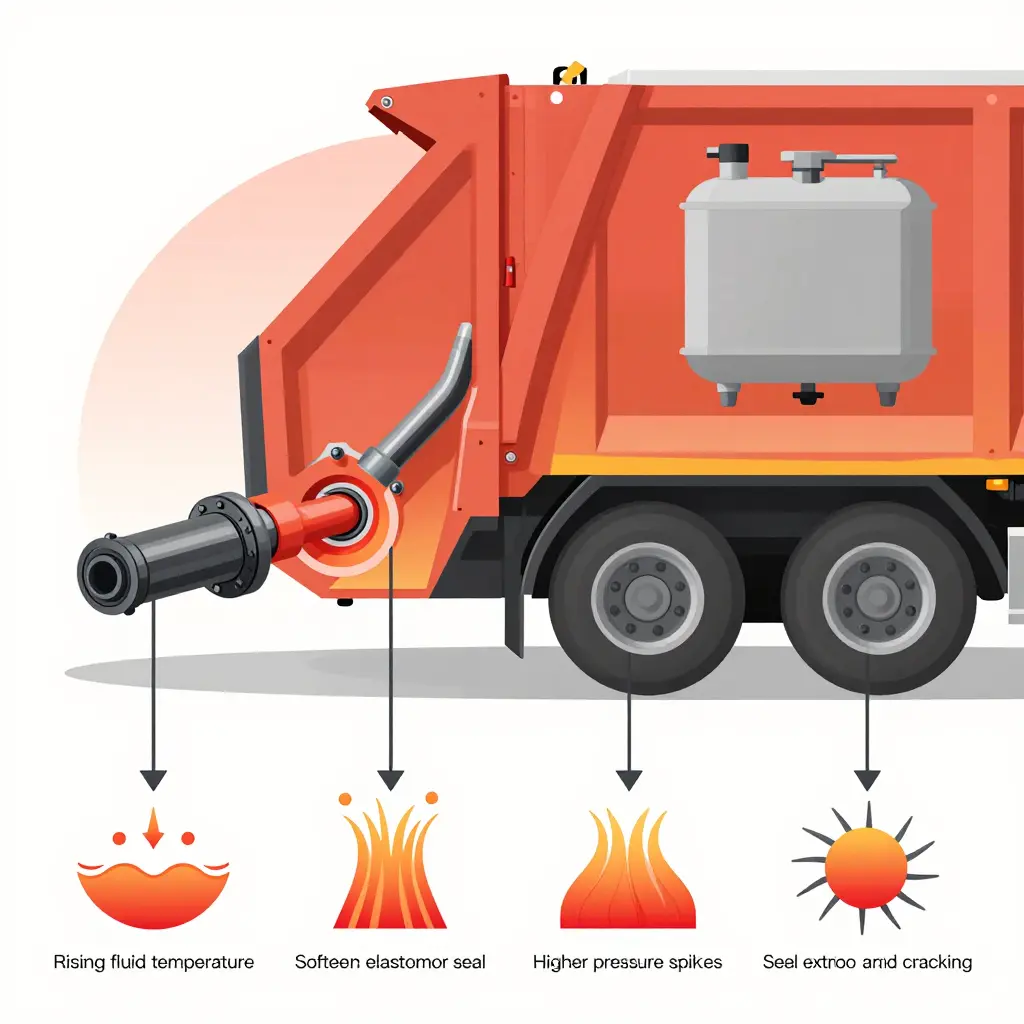
The four stages, in sequence
- Fluid temperature climbs above 180°F (82°C). Each compaction cycle forces fluid through tight orifices and relief valves, turning pressure energy into heat. With ambient summer temperatures already high, that waste heat keeps accumulating until the reservoir and circuit fluid cross 180°F.
- Elastomer seals soften. Nitrile and polyurethane lose stiffness at these temperatures. Durometer drops and compression-set resistance falls, so a seal stops springing back to its molded shape after each pressure stroke.
- Fluid thermal expansion raises circuit pressure. Heated oil expands, and in a closed or restricted circuit that expansion adds to the pressure spikes each compaction stroke already creates. Peak pressures climb past what the seal was rated for.
- Extrusion, nicks, and hardening combine. The softened seal is forced into the widening gap under higher pressure, so it extrudes and tears. Continued heat then cross-links the rubber, and the seal that began soft also turns brittle and cracks.
Why the effects compound
Each stage feeds the next. Softening reduces the seal’s resistance right when pressure spikes are rising, and higher pressure makes more heat. The heat changes the elastomer’s chemistry even when no mechanical wear is visible.
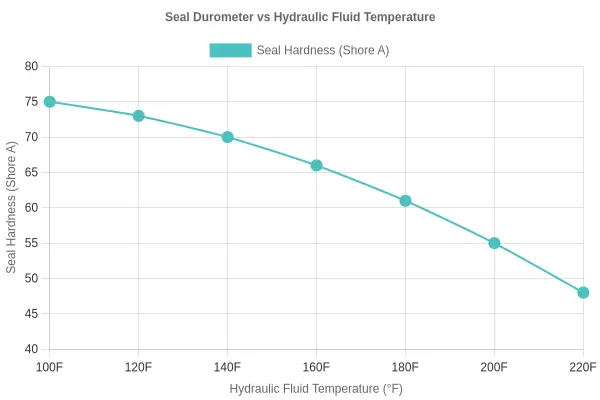
The chart above shows the relationship. Hardness falls slowly between 100°F and 160°F, then drops off sharply past roughly 180°F, the practical softening threshold for many seal compounds.
What this means on the truck
On the truck, that shows up as leaks at the gland, torn or nibbled seal edges, and seals that feel brittle instead of pliable. Operators may notice compaction getting slower and weaker as internal leakage builds. Because temperature is the root cause, a single seal swap rarely fixes it. Look at fluid condition, cooling capacity, and cycle duty together, the same way you would approach municipal waste collection fleet upkeep across a season. Track fluid temperature, fit seals rated for higher heat, and fix excessive pressure spikes before they turn a maintenance item into an unplanned breakdown.
Compaction Hydraulic Seal Failure Rate vs. Operating Temperature
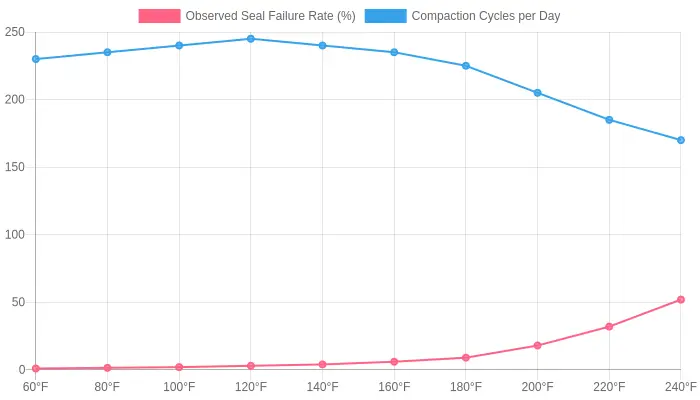
The red line is observed seal failure rate, and it stays almost flat through the mild part of the range. Between 60°F and about 160°F, failures hover in the low single digits. That is why a weeping seal in May gets written off as routine wear.
Past 180°F (82°C), the slope turns vertical. Failure rates climb from 9% to 18%, then 32%, and reach 52% at 240°F. That is where hydraulic oil starts losing viscosity and oxidizing faster, and where elastomer seals harden and take a permanent set.
The workload red herring
The blue line is compaction cycles per day, and it matters more than it looks. Through the hottest part of the season, cycle counts actually drop as packer cycles stretch out, routes slow down, and drivers nurse overheating systems. If overwork were the culprit, failures would fall with the workload. They do the opposite.
Two lines moving in opposite directions is a clear signal that heat, not duty cycle, drives the seal failures. Ambient heat raises fluid temperature, fluid temperature crosses the 180°F threshold, and the failure rate jumps with it.
How to use this on the lot
- Treat 180°F fluid temperature as your red line, not an arbitrary hour count.
- Measure fluid temp at the tank and at the packer cylinder, not just at the dash gauge.
- In a heat wave, shorten service intervals and inspect seals before the threshold, not after the leak appears.
- Prioritize coolers, airflow, and fluid condition over an ever-increasing workload theory.
When you are spec’ing refuse truck bodies and hydraulic packages, ask specifically about cooler capacity and seal material ratings for sustained high-temperature operation. A body that survives an 85°F day is not the same as one that survives a 105°F week, and this chart shows exactly why.
The Seal Failure Pattern Maintenance Crews Miss
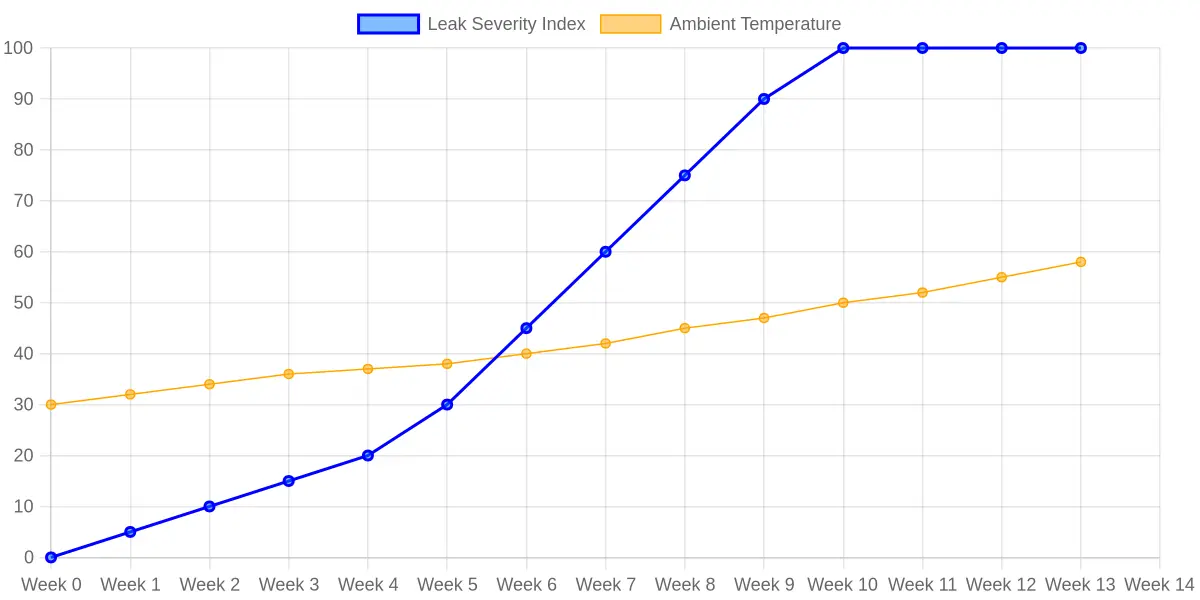
Compaction seals rarely fail without warning. What looks like a sudden breakdown is usually the last step in a long seal failure pattern that has been running for weeks, and in summer the early steps are easy to miss.
The Sequence Behind a Hydraulic Seal Blowout
Stage 1 – Compression-set loss. Over thousands of compaction cycles, the seal material slowly loses its ability to spring back. It stays flattened against the gland. There is no leak yet, only a seal that no longer grips as tightly as it should.
Stage 2 – Micro-leaks that evaporate. Once compression-set loss takes hold, thin films of fluid seep past the lip. In summer heat, that fluid evaporates almost immediately. A few drops on a warm cylinder rod leave no puddle, so nothing shows up in the daily walkaround.
Stage 3 – Extrusion at the rod and piston. Pressure now finds the weakened seal. The material bulges into the gap between the rod and the gland, and again at the piston. Extruded edges tear, and each cycle pushes the damage a little further.
Stage 4 – Full blowout under peak load. The seal finally gives way during a heavy compaction stroke, when a loaded hopper drives pressure to its highest point. This hydraulic seal blowout is the event crews notice, even though the real failure began weeks earlier.
Why Summer Hides the Symptoms
Warm weather works against accurate diagnosis in three ways. Fluid evaporates before it can pool. Dust and road grit contaminate the thin residue, so it blends into ordinary grime. And heat-hardened seal compounds stay just soft enough to hold under light duty, failing only when a sustained, high-load cycle pushes them past their limit.
In compaction hydraulics, that combination means a seal can pass every routine check and still be days from disaster. The same wear behavior shows up across municipal refuse truck hydraulics, where daily compaction cycles repeat the pattern season after season.
Tracking cylinder temperature, looking for wet dust trails near the rod, and logging cycle counts all help crews catch the pattern weeks before the blowout, rather than during it.
Hydraulic Seal Material Comparison for Compaction Circuits
Summer heat pushes hydraulic oil past its normal operating range, and elastomers respond differently. Some stay flexible; others harden, crack, or take a permanent set that lets oil weep past the rod. The comparison below shows how each common seal material holds up when compaction pressures and ambient heat keep fluid hot for hours. Selecting the right municipal truck body is half the job; matching seals to the heat they will actually face is the other.
| Seal Material | Typical Heat Resistance (°F/°C) | Fluid Compatibility | Expected Service Life in Hot Conditions | Best Use Case in Compaction Circuit |
|---|---|---|---|---|
| Nitrile (NBR) | -40 to 250°F (-40 to 121°C) | Good with petroleum-based hydraulic oils; poor with phosphate esters and ketones | Moderate; hardens and takes compression set above 200°F | General-purpose rod and piston seals in packer cylinders |
| Fluoroelastomer (FKM/Viton) | -15 to 400°F (-26 to 204°C), peaks to 450°F | Excellent with mineral and petroleum oils; poor with ketones and low-molecular esters | Long; retains elasticity during sustained high heat | High-heat cylinder and static seals near hot zones |
| Polyurethane (PU) | -40 to 200°F (-40 to 93°C) | Good with petroleum-based fluids; poor with water and steam | Good abrasion life, but softens with prolonged heat exposure | Rod and wiper seals where abrasion resistance matters |
| PTFE | -65 to 500°F (-54 to 260°C) | Near-universal chemical compatibility | Excellent; low friction and stable at high temperatures | High-temperature, low-friction seals and backup rings |
| EPDM | -50 to 300°F (-45 to 150°C) | Excellent with water, steam, and glycol; poor with petroleum oils | Good in water/steam service, unsuitable for oil circuits | Water- or steam-exposed seals, not mineral-oil hydraulics |
The elastomer that handles dry heat best is often wrong for a hot mineral-oil circuit. EPDM is excellent with water and steam but poor with petroleum oil. And the cheapest seal seldom lasts a full summer of double shifts.
The Hidden Summer Loop That Kills Compaction Seals
By the time a seal blows out, it has been stuck in a self-reinforcing cycle for weeks. Under summer heat, each stage feeds the next, until slow wear becomes a mid-route failure. The diagram maps the loop so crews know where to break it.

Reading the Loop
- Heat Buildup – Hydraulic fluid heats up as the compactor cycles, and ambient summer temperatures rob the system of its ability to shed that heat.
- Seal Softening – Sustained heat softens the elastomer, lowering its hardness and its ability to hold shape under pressure.
- Compression Set and Extrusion – A softened seal takes a permanent set and begins to squeeze out of its groove, thinning where it should stay thick.
- Leakage and Pressure Loss – The deformed seal leaks, pressure drops, and the pump works harder, generating still more heat.
That last stage feeds straight back into the first, so the failure accelerates rather than settling. Break the loop early, at the heat stage, before softening becomes permanent deformation. For fleet managers building maintenance plans around this pattern, sourcing the right refuse trucks is one of the first practical steps.
Build a Summer Preventive Maintenance Schedule for Compaction Hydraulics
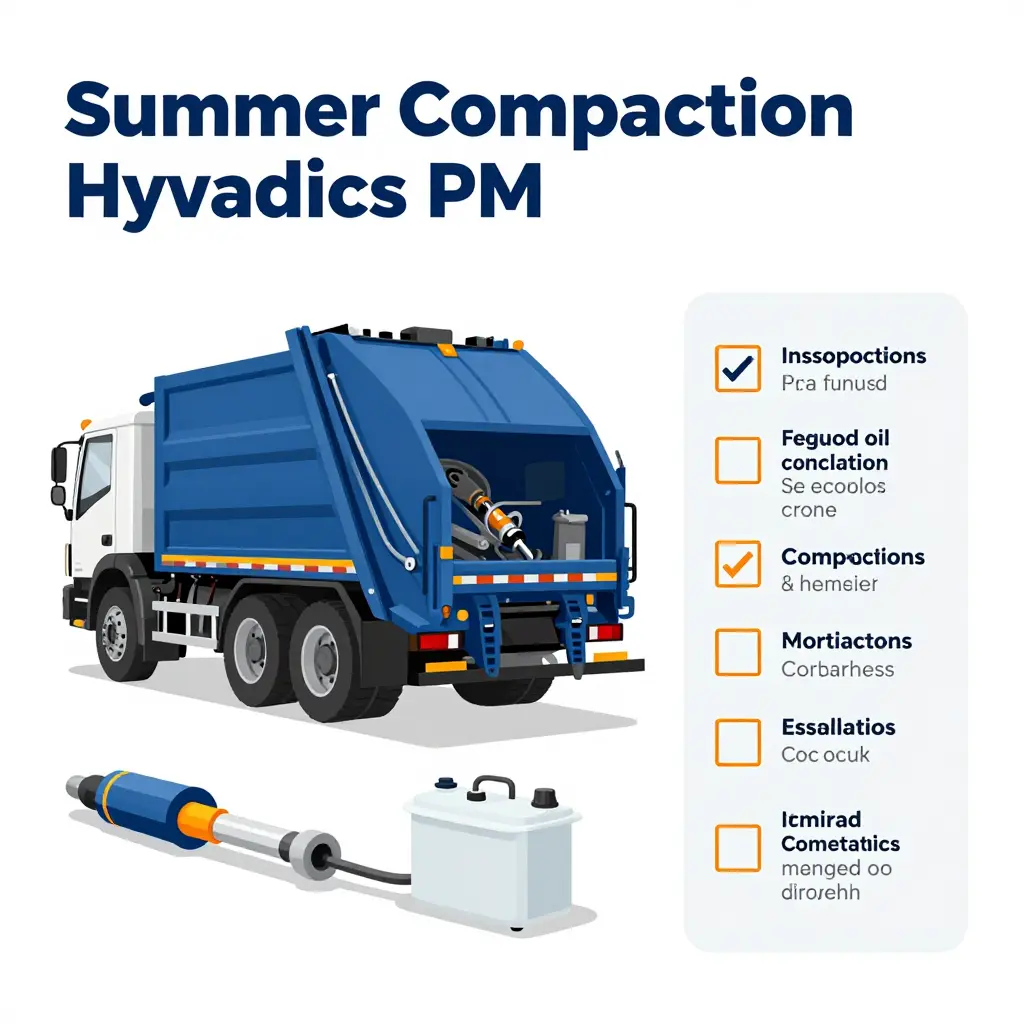
Most compaction hydraulic failures do not announce themselves. They creep in over a hot summer, one small O-ring at a time. By the time a cylinder blows fluid across a hopper, the warning signs were already weeks old. A disciplined summer schedule turns that slow, expensive mystery into a planned repair.
Fluid Sampling Intervals
Heat accelerates oil oxidation, so sampling should tighten when ambient temperatures climb. In summer, pull a sample roughly every 250 operating hours or monthly, whichever comes first. Watch for water content above 0.05%, darkening, and rising particle counts.
| Operating Condition | Sampling Interval | Action Threshold |
|---|---|---|
| Summer (above 30 C / 86 F) | Every 250 hours or monthly | Water > 0.05%, rising contamination |
| Shoulder seasons | Every 500 hours or quarterly | Trend flagged, no immediate action |
| After any seal repair | Within 50 hours | Confirm system flushed clean |
Fluid Type and Viscosity for High-Heat Operation
Use a premium anti-wear hydraulic oil with a high viscosity index, ideally ISO VG 46 rated for sustained high-temperature service. A higher viscosity index holds film strength as the oil thins, which protects seal lips and metal surfaces during long compaction cycles. Never top off with a mismatched grade to save a trip to the parts room.
Seal Inspection Criteria
Effective hydraulic seal inspection covers three simple checks: a durometer reading to confirm the rubber has not hardened beyond specification, a visual sweep for extrusion where the seal is being squeezed out of its groove, and a feel test for brittleness or glazing. Any seal that has hardened, extruded, or cracked is already on its way to failure, even if it is not leaking yet.
Cooler and Reservoir Inspection
Wash the oil cooler fins so summer airflow is not blocked by dust and debris. Verify the cooling fan and thermostat work, and check reservoir levels with the fluid at operating temperature. Inspect the breather, magnet, and suction strainer for contamination that signals internal wear.
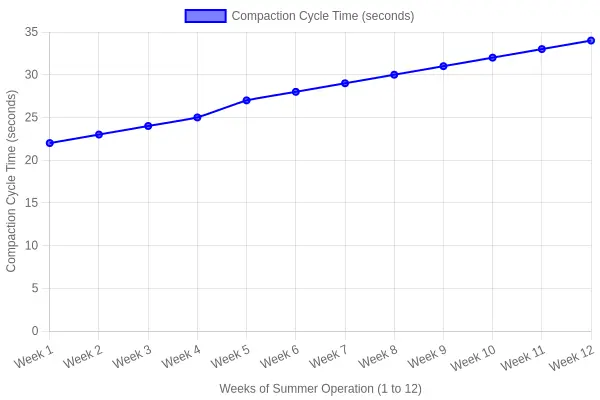
Cycle-Time Logging
Log the compaction cycle time every week. A creeping increase is the earliest honest signal of internal leakage and seal degradation, long before a visible drip appears.
A Simple Inspection Sequence
- Sample the fluid and record the results.
- Read cylinder and seal condition with a durometer and visual pass.
- Clean and test the cooler, then check reservoir and breather.
- Log the compaction cycle time and compare it to last week.
- Flag anything trending toward the inspection trigger for repair.
How the Schedule Breaks the Failure Pattern
Consistent compaction system maintenance replaces reactive guessing with evidence. Regular sampling, disciplined hydraulic seal inspection, and cycle-time logs expose degradation while it is still cheap to fix, so refuse truck hydraulics stop failing in the middle of a route.
Equipment from established manufacturers with strong R&D, such as Zoomlion, is engineered for thermal tolerances that maintenance still must support. Good engineering sets the ceiling; a disciplined schedule keeps the truck operating beneath it. For fleets managing varied waste-collection assets, pairing this routine with smart refuse fleet upkeep practices keeps every unit protected through the hottest months.
What the Numbers Tell You
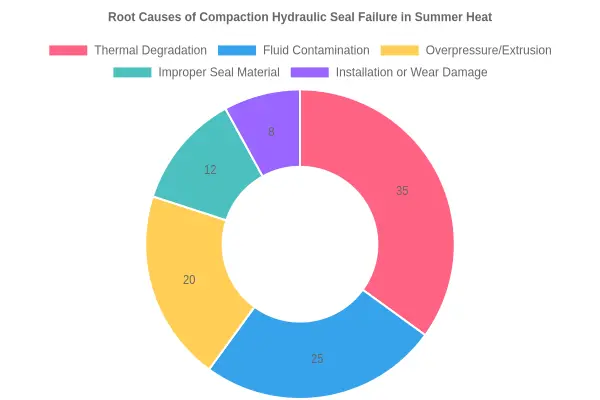
When crews pull a failed compaction cylinder seal, most assume wear and tear is the culprit. The data disagrees. In summer heat, thermal degradation alone drives roughly 35% of failures – more than any single mechanical cause. That is chemistry and physics, not bad luck: the truck sits in a hot yard with the packer cycling.
Logged failures break down this way:
| Root Cause | Share of Failures |
|---|---|
| Thermal Degradation | 35% |
| Fluid Contamination | 25% |
| Overpressure/Extrusion | 20% |
| Improper Seal Material | 12% |
| Installation or Wear Damage | 8% |
60% of summer seal failures come from heat and contaminated fluid combined, and both are under your maintenance schedule’s control. Only 8% trace back to plain wear, which means the seals you replace were usually fine when they were installed. Something in the system cooked, stretched, or poisoned them.
Why Thermal Degradation Dominates
Hydraulic oil that runs 30-40°F above its normal operating band breaks down faster, thinning out and losing the film strength that keeps seals lubricated. Rubber compounds harden, lose elasticity, and crack at the lip. Add fluid contamination – moisture, grit, and degraded oil pushing past worn wipers – and you get a one-two punch that no premium seal can survive.
Turning the Chart Into a Maintenance Plan
- Thermal (35%): Add an oil-temperature check to your daily walkaround. If compaction coils routinely exceed 180°F, the duty cycle or cooler is the real problem.
- Contamination (25%): Change filters on heat-adjusted intervals, not calendar intervals. Fluid analysis every 500 hours catches water ingress early.
- Overpressure (20%): Revisit relief-valve settings and operator technique; reliefs that never actuate are as dangerous as ones that bleed constantly.
- Material choice (12%): Match seal compound to your actual oil temperature, not the spec sheet.
For fleets managing older units through peak summer tonnage, review this alongside your broader waste collection truck fleet planning. The pattern is measurable, and it is almost entirely preventable.
Linking Seal Care to Smart Fleet Decisions
Summer heat exposes hydraulic seal weaknesses fast, but many failures start upstream, in how you plan, spec, and buy your trucks. Crews that treat seal upkeep as part of a wider fleet strategy catch problems long before the first heat wave hits. When route demand climbs and your oldest compactors are already running hot, a well-structured municipal garbage truck rental plan can cover the gap and give stressed equipment the downtime it needs. Equipment choice matters just as much, so review compaction body specifications to understand how each design handles hydraulic pressure and heat buildup, then set realistic seal inspection intervals instead of guessing. For departments juggling several waste streams, hooklift-based waste-handling equipment brings a different hydraulic profile entirely, and those differences belong in your maintenance calendar before July arrives. Finally, if you are weighing whether to repair or replace a unit that keeps overheating, exploring used municipal fleet trucks can stretch the budget while you shore up seal reliability across the whole lineup. The seal failures you chase in August are often decided months earlier, at the planning table.
Frequently Asked Questions: Refuse Truck Compaction Hydraulics in Summer Heat
How can I tell if hydraulic seals are failing due to heat?
Heat-related seal failures rarely start with a dramatic leak. Watch for slow rod creep, weeping around the packing gland, and fluid that darkens or smells burnt after long compaction hydraulics cycles. An inspection that checks for glazing, hardening, or tiny nicks catches those signs before a full blowout.
What is the ideal hydraulic fluid temperature range for compaction systems?
Most refuse truck compaction hydraulics run best between 120°F and 160°F (49°C to 71°C). Once fluid climbs past 180°F, seal elastomers begin to harden and lose elasticity, accelerating wear. On hot days, monitor reservoir temps and add cooling capacity if you routinely exceed the upper range.
How often should seals be inspected in summer?
During peak summer heat, shorten your hydraulic seal inspection interval to every 250 operating hours or monthly, whichever comes first. Seasonal temperature swings stress seals more than steady conditions, so pair a weekly visual leak check with a monthly detailed inspection. Documenting each check helps you spot a developing seal failure pattern early.
Can seal material choice prevent heat-related failures?
Yes. Upgrading to high-temperature elastomers such as Viton (FKM) or PTFE can dramatically extend seal life in compaction hydraulics. Standard nitrile seals soften and crack faster above 180°F, while these materials tolerate sustained heat. Matching seal material to your actual operating temperatures is one of the cheapest reliability upgrades available.
Does cycle time indicate seal health?
Yes. A gradual increase in compaction cycle time often signals internal seal leakage long before external drips appear. When seals bypass fluid internally, the ram moves slower and the system works harder. Tracking cycle times daily turns a vague seal failure pattern into a measurable, early-warning metric.
What causes a sudden hydraulic seal blowout?
A blowout usually traces back to extreme heat combined with pressure spikes, contaminated fluid, or a partially failed seal that finally gave way. When fluid overheats it thins and can no longer cushion shock loads, so a single surge pushes past a weakened lip. Preventing it means controlling temperature, filtering fluid, and replacing seals at the first sign of wear – the same discipline that keeps any municipal waste hauler running through the hottest weeks of the year.
Conclusion
Summer heat creates a predictable seal failure pattern in refuse truck compaction hydraulics. Higher ambient temperatures raise hydraulic fluid temperatures, accelerating seal degradation and causing leaks, pressure loss, and reduced compaction force. Once crews recognize this pattern, the failures stop looking random.
Early detection is the most effective defense. Routine inspections, thermal checks, and fluid analysis catch seal wear before it becomes a roadside breakdown. Correct maintenance schedules, adjusted for summer duty cycles, keep compaction systems within safe temperature ranges.
Material choice matters too. Seals rated for higher temperatures and compatible with modern hydraulic fluids last longer under heat stress. Learn more about selecting the right municipal truck bodies up front to reduce repeat failures and lower total maintenance cost.
For maintenance crews, operators, and fleet managers, proactive refuse truck compaction hydraulics maintenance is not optional. It protects uptime, controls budgets, and keeps collection routes on schedule. When everyone watches the same seal failure pattern, repairs become planned rather than reactive.
The practical takeaway is simple: schedule summer inspections before the heat peaks. Check seals, hoses, and fluid condition on every compaction unit, and act on early warning signs immediately.